
Nonprofit Data & Systems Strategy
Why Your Reporting Always Requires a Call to Someone First
Nonprofit Reporting Tools: Why Your CRM Isn't Enough (And What to Do About It)
Your CRM has the data, but you still need a separate tool to actually get answers.
You need a report. Something simple. "How many clients did we serve last month by program?"
So you open your CRM. You look for the reports section. You see some nonprofit data dashboards. None of them show exactly what you need. So you call someone.
That someone spends an hour pulling data, cross-referencing it, cleaning it up, and sending you a spreadsheet. By the time you have the answer, it's too late to do anything useful with it.
This happens every time. And it feels like a CRM problem. But it's not. It's an architecture problem - one that nonprofit reporting tools are designed to solve.
The CRM Isn't a Nonprofit Reporting Tool
This is the thing most nonprofits don't realize until they've already bought and implemented a CRM: the CRM is not where nonprofit reporting happens.
The CRM is where you store information. It's your system of record. It's where transactions live. It's where history gets recorded.
Nonprofit reporting is different. It requires the ability to ask questions across all that data. To filter, aggregate, and reshape it; to compare this quarter to last quarter; to break it down by program and demographic all at once.
Most CRMs have nonprofit data dashboards built in. But they're usually designed around the data the vendor thought you'd need, not the questions you actually have.
To answer your actual questions, you need a different tool. You need dedicated nonprofit reporting tools - something like Tableau, Metabase, or Power BI.
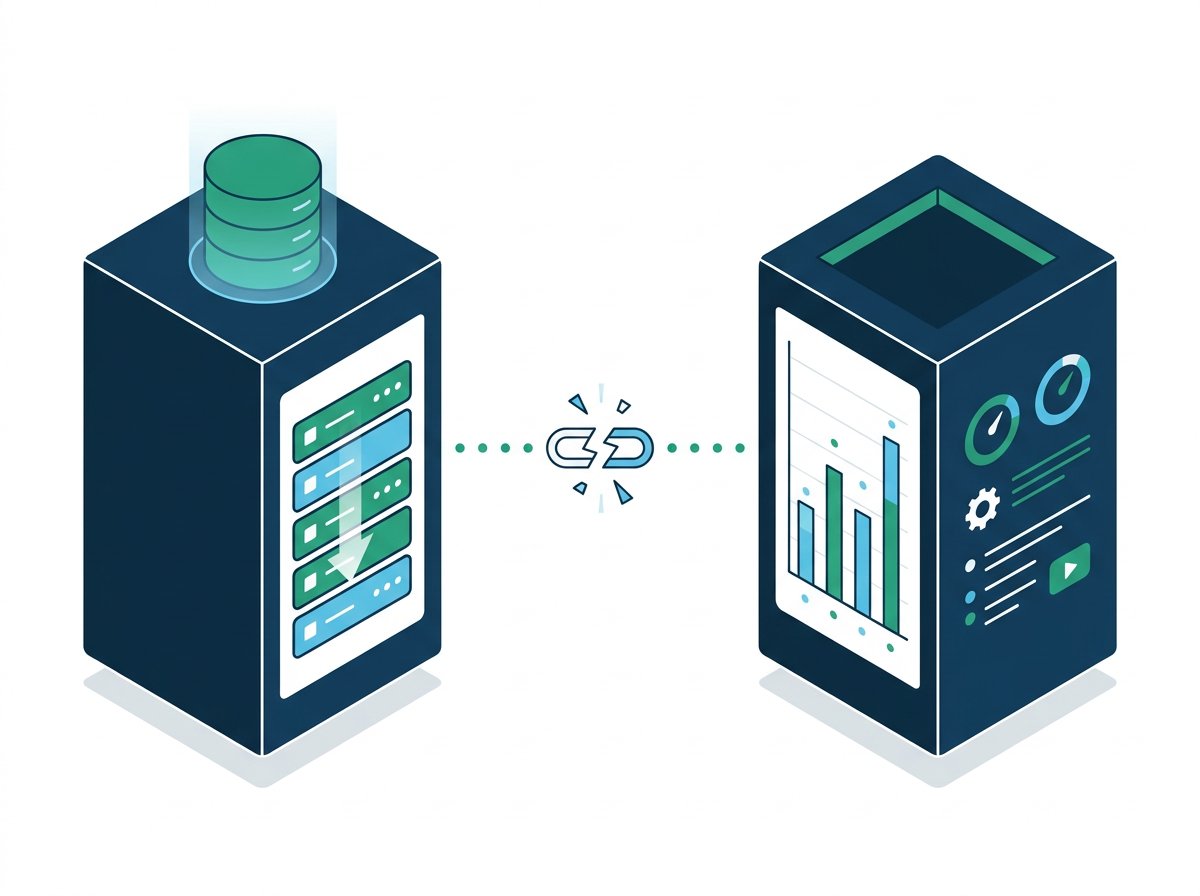
These tools are designed specifically to turn data into answers. They connect to your CRM, pull the data they need, reshape it, and surface it in nonprofit data dashboards that answer your actual questions.
But here's the problem: most nonprofits don't have that connection set up.
Why the Connection Isn't There
Sometimes it's a budget issue. The CRM implementation was expensive, and adding nonprofit reporting tools feels like too much.
Sometimes it's a scoping issue. When you implemented the CRM, nobody asked, "How will we actually get reports from this?" They just assumed the CRM would handle everything.
Sometimes it's a technical issue. Your CRM doesn't have an API, or it does, but it's hard to set up, so the integration never gets built.
And sometimes it's simpler than that: nobody ever told you that you needed two separate tools. You thought nonprofit reporting tools weren't necessary. You thought one CRM was supposed to do it all.
So what you end up with is this: your CRM has all the data. A staff member knows the system well enough to navigate it. They know which codes mean what. They know which filters to apply to get accurate numbers. They pull the data out manually, paste it into a spreadsheet, clean it up, format it and send you a report.
That person is doing the job that nonprofit reporting tools should be doing automatically.
Why This Matters More Than You Think
When reporting requires calling someone, you stop asking questions. You ask the obvious ones. The ones you know how to get answered. But the questions that require analysis, that need nonprofit data dashboards pulled in a new way, that take time and effort, don't get asked.
So strategy conversations get thinner. You argue about what to do based on incomplete information. You make decisions without being able to verify them against data.
The organizations that lead with data are the ones where someone can ask a question that wasn't on the agenda, and the infrastructure exists to surface the answer in minutes. Not hours. Not days. Minutes.
But it only works if nonprofit reporting tools are actually connected to your data.
What Has to Happen
First, know what you have. Do you have a CRM with data in it? Do you have nonprofit reporting tools connected to it? If not, that's your gap.
Second, close that gap. Choose nonprofit reporting tools that can connect to your CRM. Most modern CRMs have APIs. Most modern nonprofit reporting tools can connect to those APIs. The integration isn't usually hard. It's just not common yet.
Third, name someone to own it. Someone needs to understand how data flows from the CRM to the nonprofit data dashboards layer, and how to build reports that answer real questions. This is different from CRM expertise. It's a different skill - one that nonprofit reporting tools make possible.
This work takes time. It also takes some technical setup. But most nonprofits can do it. The nonprofit reporting tools are affordable. The APIs exist.
What's missing is usually just the decision to build it.
The Question Worth Asking Now
The next time you need a report, ask yourself: could someone else run this same query without calling the person I just called?
If the answer is no, your nonprofit reporting infrastructure needs work. It's fixable, but it requires looking at the whole stack, not just the CRM - and adding the nonprofit reporting tools that should be handling this work.
Is your reporting infrastructure built to support real questions?
Or download our Data Health Audit to assess whether your CRM and reporting layers are actually connected.