
Your Staff Is Already Using AI. Get Clarity Before It Becomes a Liability.
Claim Your FREE Toolkit!
You'll receive an email with the link to download this PDF. We'll also send a 3-email series with insights and next steps if you want to go deeper—but the toolkit itself is yours to keep and use immediately.
Get Your
Free Toolkit
Fill out the form to receive your toolkit instantly.
From "We Have No Idea" to "We Have a Policy Draft" in Five Steps
Your staff is using ChatGPT, Claude, Copilot, or AI-powered features built into your tools. You probably know this is happening. What you might not know is what data they're touching, which tools have been reviewed for risk, or what rules actually need to exist.
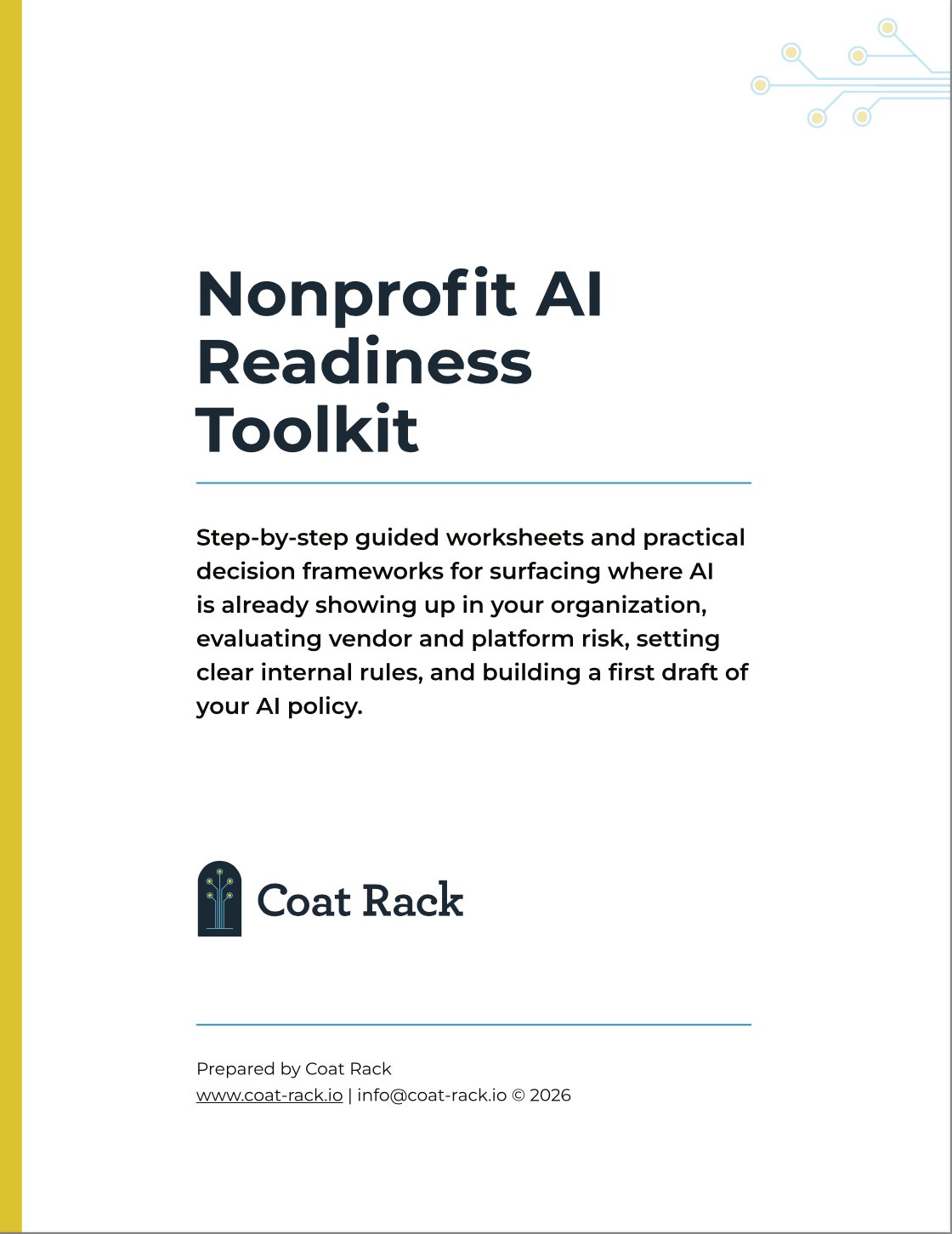
This toolkit gets you from assumptions to decisions. In five sequential steps, you'll map what's sensitive, audit what's in use, evaluate vendor risk, set real rules, and build a policy draft your leadership team can review and act on.
- Step 1: Map Your Sensitive Information. Before you evaluate any tools, you need to know what information would cause real harm if exposed or misused. Donor data. Client/participant information. Financial records. Health details. This step is your foundation. Everything else builds on it.
- Step 2: Document Where AI Is Already Happening. Get the honest picture. This is usually more than leadership expects: informal tool use, built-in AI features, experiments that became workflows. You can't govern what you don't see.
- Step 3: Evaluate Your Vendors and Platforms. Using a tool doesn't mean you know what it does with your data. Free tiers, recently updated terms, built-in AI features—they all deserve a closer look. This step tells you which tools are touching sensitive information and what the real risks are.
- Step 4: Set Clear Internal Rules. Create plain-language rules your staff can actually follow: what's allowed, what's not, who approves new tools, what to do when something goes wrong. Rules that only live in a policy document are not rules.
- Step 5: Build Your AI Use Policy Draft. End with a starting point, not a blank page. A first draft that reflects your real decisions, ready for your leadership team and legal counsel to review before it becomes official.

What This Toolkit Will Help You Do
- Stop operating on assumptions. Most nonprofit leaders know AI is already in use. What they don't always know is where, which tools are handling sensitive information, or whether anything has been reviewed. This toolkit surfaces the real picture.
- Move from chaos to governance. You'll work through a structured process that ends with documented decisions and a policy draft you can actually use. Not a list of things to think about someday. A real plan.
- Protect the people you serve. Clients, donors, and community members trust your organization with sensitive information. This toolkit helps you make sure that trust isn't being put at risk by tools nobody has reviewed.
- Go at your own pace. This is self-guided. Work through it with your leadership team, department by department, at whatever speed fits your organization right now.
What AI Readiness Actually Means
AI readiness is not building cutting-edge AI models, running a one-time workshop, or guaranteeing legal compliance. You don't need a dedicated AI team or a big budget.
AI readiness is knowing what tools you're using, understanding which ones touch sensitive information, having clear rules your staff can follow, and having a policy draft that reflects real decisions.
You don't need a glossy strategy document. You need enough clarity to stop operating on assumptions.


Who This Is For
This toolkit is designed for nonprofit leaders (EDs, COOs, IT managers, board members) at organizations with 15-75 staff and 3M-25M budgets who:
- Know their staff is already using AI tools (ChatGPT, Claude, Copilot, Salesforce Agentforce, built-in features)
- Haven't formalized rules or a policy yet
- Want a practical, step-by-step path that ends with a draft policy, not just ideas
- Need guidance that's clear and usable, not legal jargon
- Are ready to move from "we have no idea what's happening" to "we have a plan"
Who This Is NOT For
If your organization hasn't started using AI yet, this toolkit will become relevant soon—but it's not your starting point right now.
If you already have a formal AI policy in place and an established governance process, you've already done this work.
Download and Get Started
Get instant access to the Nonprofit AI Readiness Toolkit and start building your AI policy today.